|
A weekly roundup of the latest at IMPRI! ͏ ͏ ͏ ͏ ͏ ͏ ͏ ͏ ͏ ͏ ͏ ͏ ͏ ͏ ͏ ͏ ͏ ͏ ͏ ͏ ͏ ͏ ͏ ͏ ͏ ͏ ͏ ͏ ͏ ͏ ͏ ͏ ͏ ͏ ͏ ͏ ͏ ͏ ͏ ͏ ͏ ͏ ͏ ͏ ͏ ͏ ͏ ͏ ͏ ͏ ͏ ͏ ͏ ͏ ͏ ͏ ͏ ͏ ͏ ͏ ͏ ͏ ͏ ͏ ͏ ͏ ͏ ͏ ͏ ͏ ͏ ͏ ͏ ͏ ͏ ͏ ͏ ͏ ͏ ͏ ͏ ͏ ͏ ͏ ͏ ͏ ͏ ͏ ͏ ͏ ͏ ͏ ͏ ͏ ͏ ͏ ͏ ͏ ͏ ͏ ͏ ͏ ͏ ͏ ͏ ͏ ͏ ͏ ͏ ͏ ͏ ͏ ͏ ͏ ͏ ͏ ͏ ͏ ͏ ͏ ͏ ͏ ͏ ͏ ͏ ͏ ͏ ͏ ͏ ͏ ͏ ͏ ͏ ͏ ͏ ͏ ͏ ͏ ͏ ͏ ͏ ͏ ͏ ͏ ͏ ͏ ͏ ͏ ͏ ͏ ͏ ͏ ͏ ͏ ͏ ͏ ͏ ͏ ͏ ͏
| |
| |
This Week at #IMPRI
(2021 | W15 | April 12 - 18)
|
|
| |
|
|
Dear IMPRI Well-wisher,
Greetings from the team!
We hope you are safe and well amid the resurgence and new high of Coronavirus cases, and new forms of lockdowns and preventive guidelines.
With Ambedkar Jayanti approaching, on the 14th of April, IMPRI will be focusing on discussions through the lens of human dignity, development, equality and justice, with a renewed energy.
The newsletter will apprise you of these upcoming events, the week's publications, and videos of past week's #WebPolicyTalks in case you missed them. We hope to see you soon at one of our events!
Wishing you a great week ahead,
Anshula Mehta, Assistant Director, IMPRI
|
|
|
Upcoming #WebPolicyTalks
Register to attend!
|
|
|
|
#CityConversations
| |

|
Dr Shubhagato Dasgupta (Senior Fellow, Centre for Policy Research (CPR), New Delhi) on Re-Form: Lessons for Urban Governance Futures from the Pandemic
When: April 15, 2021 (Thursday); 17:00 IST | REGISTER HERE
Discussants: Prof Santosh Mehrotra (Formerly, Jawaharlal Nehru University (JNU), New Delhi) and Prof Souvanic Roy (Indian Institute of Engineering Science and Technology (IIEST), Howrah)
|
|
|
|
#TowardsAccountability
| |

|
Dr Munawer Khwaja (Fiscal Economist, Former Technical Advisor, Fiscal Affairs Department, International Monetary Fund) on Are We in Good Hands? Is Tax Administration in India Following Good International Practices?
When: April 22, 2021 (Thursday); 18:00 IST | REGISTER HERE
Discussant: Prof Indira Iyer (National Council of Applied Economic Research (NCAER), New Delhi)
|
|
|
|
From our partners:
| |

|
People’s Participation in City Planning: Bottom-up planning; Participatory Design; Consultative Practice – How do we generate inclusive and people-centric cities?
#StudioINHAF #Rethinking #Cities #Webinar48 #RethinkingCities
Register Here: https://bit.ly/3s31smi
Date: April 12, 2021
Time: 4:30-6:30 PM (India), 8:00-10:00 AM (Brazil), 7:00-9:00 PM (Philippines)
Speakers:
Aravind Unni (Indo-Global Social Service Society), Shalaka (Main Bhi Dilli, Delhi), Dinesh Abrol (Gurgaon water forum & TRCSS, JNU, Delhi), Fabricio Leal De Oliveira (Ippur Ufrj), Marina Joseph (Youth for Unity and Voluntary Action - YUVA), Rumi Aijaz (Observer Research Foundation, Delhi), Mary Racelis (Ateneo de Manila, School of Social Sciences, Manila, Philippines), Kaustuv Bandyopadhyay (PRIA (Society for Participatory Research In Asia), India)
#BOTTOMUPPLANNING #CITYPLANNING #CONSULTATIVEPRACTICE #PARTICIPATORYDESIGN #PEOPLECENTRICCITIES
|
|
|
|
| |

|
Bengal Polls 2021: What BJP promises, what BJP delivers by Basant Kumar Mohanty | The Telegraph
One of the experts doubtful about the BJP’s promise to Bengal is economist and former JNU professor Santosh Mehrotra, who has edited the book Revising Jobs an Agenda For Growth that sums up the job situation under BJP rule. Mehrotra accepted that the job situation had suffered during the last couple of years of UPA rule too, but said the persistent decline under Modi’s rule was a result of policy decisions and, therefore, more worrying.
“A policy paralysis after the corruption allegations — some of it still unproven — a global slowdown after 2011, over-lending by the banks were serious problems (that hurt the economy during the UPA’s last years in power),” he said.
Arjun Kumar, director of the Impact and Policy Research Institute, a private think tank, said the demonetisation had shaken the confidence of potential employers and the subsequent economic slowdown had affected job creation.
Labour minister Santosh Gangwar had told the Rajya Sabha on March 24 that the Centre was adopting measures like the Atmanirbhar Bharat Rozgar Yojana under which the government paid the EPFO contributions for two years for private-sector employees who earned salaries below a cut-off. Gangwar also cited the PM Svanidhi Scheme under which collateral-free loans up to Rs 10,000 are given to street vendors “Employment generation coupled with improving employability is the priority of the government. The government is providing fiscal stimulus of more than Rs 27 lakh crore as part of the Atmanirbhar financial package,” he said.
|
|
|
- 'Electric Light and Living Beings' by Gurinder Kaur | The Citizen
Using more light consumes more energy, for which we still depend on fossil fuels, destructive mining, dams, deforestation and greenhouse gas emission. And there is the question of light pollution.People living in cities with high levels of artificial light have a hard time seeing more than a handful of stars at night. More than 80% of the world's population, and 99% of North Americans and Europeans, cannot see the natural scenery at night because of light pollution.
- 'The Status quo in Indian cities: How to break it?' by Soumyadip Chattopadhyay, Arjun Kumar | IMPRI
"We are caught in a status quo where the incremental effort we are making is just not enough to provide an environment in our cities where citizens can fulfil their socio-economic potential particularly the urban poor and disadvantage minorities but by and large all citizens." Srikanth Viswanathan and Srinivas Alavilli at a #WebPolicyTalk
- 'Forest Fires in North India: A Man-Made Disaster' by Tikender Singh Panwar | Newsclick
It is just the first week of April and forest fires have nearly started engulfing large tracts of forest land in Uttarakhand and Himachal Pradesh. Forty-five incidents of forest fires in the last 24 hours in Uttarakhand captured the headlines in most of the national dailies. Similar reports are coming from Himachal Pradesh as well. - 'The Role of Policy and Society in Accelerating Inclusive Equality' by Simi Mehta, Anshula Mehta and Sakshi Sharda | IMPRI
"The patriarchal lineage system and social norms have presented a condition wherein “land and property rights have been consciously used to keep women powerless and dependent, to demand their autonomy, self-determination, and equality, and personal security.” Right to land and property implies access to power, the power relations as they stand right now translate in men exercising horizontal and vertical control over women, determining ownership in father’s lineage, and formulating taboos for gender." - Prof Govind Kelkar at a #WebPolicyTalk
- 'Enabling SMEs to penetrate global value chains of TNCs: Need to strengthen regional innovation systems' by Arjun Kumar and Ritika Gupta | Counterview
“For emerging economies like India, if one has to make a mark on the global production network similar to other emerging economies, it is necessary to enable domestic forms viewing SMEs to penetrate and link with the GVCs on an increasing scale.” Prof M. H. Bala Subrahmanya at a #WebPolicyTalk
|
|
|
| |
|
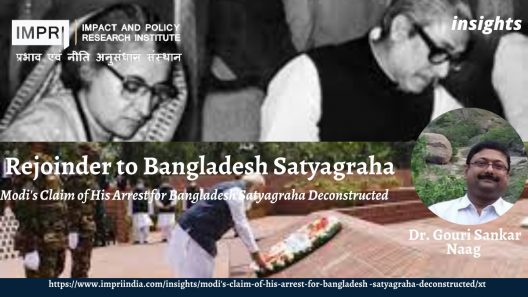
Modi’s Claim of His Arrest for Bangladesh Satyagraha Deconstructed by Gouri Sankar Nag | IMPRI
Even if we put things in a historical perspective, we would see that the struggle in East Bengal did not begin as a planned nationalist movement for liberation from Pakistan. It was a historical conjuncture of events in the late 1960s that lent the popular mobilization in East Bengal sort of anti-imperialist character vis-à-vis the role and hostile attitude of Pakistan. Ideologically it was also a mismatch to Sangh Parivar to take up the cause of the liberation of Bangladesh.
|
|
|
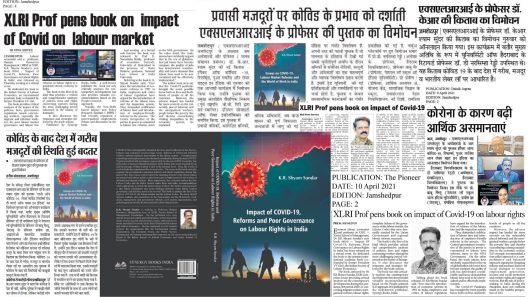
- 'Impact of COVID-19, Reforms and Poor Governance on Labour Rights' by XLRI Media, IMPRI Team | IMPRI
Talking about the book released, Dr K R Shyam Sundar said, “Ever since the introduction of economic reforms in 1991 in India, employers, and critics of labor regulation have argued for the introduction of reforms of the labor laws and the inspection system. They demanded codification of labor laws and the introduction of employer-friendly reforms in the process." - “Must-Read For All Those Interested In The World of Work” – Prof Praveen Jha @ IMPRI #WebPolicyTalk by Sunidhi Agarwal, Chhavi Kapoor | IMPRI
"The current book focuses on the context of the COVID 19 pandemic and its implications for the world of work. Prof Sundar has chronicled these with care, empathy, and an eye for detail while providing a persuasive analysis." - “Gig Workers Are Mislabeled” – Dr Radhicka Kapoor @ IMPRI #WebPolicyTalk by Sunidhi Agarwal, Chhavi Kapoor | IMPRI
"Importantly, he (Prof K. R. Shyam Sundar) urges us to expand the horizons of the debate on the subject beyond the narrow agenda of “flexibility” to issues like a minimum set of decent conditions of work and wages to all workers and a minimum basic level of social security."
- “We Don’t Have An Employment Policy of India Yet” – Prof D N Reddy @ IMPRI #WebPolicyTalk by Sunidhi Agarwal, Chhavi Kapoor | IMPRI
“Here is a book that tells you the precariousness of the migrant and informal workers during the pandemic COVID-19 due to the conscious failure of the state and the apathy of the judiciary. In much more detail it exposes the deficits of the reforms emerging in the shape of the Four Labour Codes”
- “There Has Been An Onslaught on Labour Rights” – Ramapriya Gopalakrishnan @ IMPRI #WebPolicyTalk by Sunidhi Agarwal, Chhavi Kapoor | IMPRI
"The book is a must-read for anyone interested in understanding: the impact of covid-19 on the lives of workers in the country and the changes in the labor law landscape in the new normal world." - “Rejectionism Is Not A Solution” – Prof Babu Mathew @ IMPRI #WebPolicyTalk by Sunidhi Agarwal, Chhavi Kapoor | IMPRI
“I recommend this book of Prof Shyam Sundar to serious students of labor studies: One must carefully read both the explicit message and the one between the lines to decipher the glaring and I’ll inform swing of the Indian State towards “Ease of doing business” while grossly neglecting “Core labor standards” and “decent conditions at work” for the impoverished millions.”
|
|
|
| |

|
Chandni Chowk Redevelopment: The Disappearance of the Erstwhile and the Present by Tikender Singh Panwar, Anjali Ojha | IMPRI
The green cover has completely been removed. Instead of planting trees at the center, all of them have been removed and during summers one will have a heat island effect. Since Chandni Chowk is a large wholesale market where hundreds of trucks enter and leave during the night, the red sandstone used will not even last for a year, given the strength of the load-bearing capacity of these stones. These have already started breaking and will not sustain for long. Instead, what the redevelopment project should have envisaged is to have an extensive dialogue with not only the important stakeholders but also people by large.
|
|
|
- 'Resurgence of COVID-19 in India: A Tale of Six Unlearnt Lessons' by Arun Kumar | The Wire
The coronavirus situation has abruptly and rapidly changed since mid-February. We should have used the lucky reprieve we were given in September 2020 to prepare for the worst, but complacency set in.
- 'The farce that is the Ease of Living Index' by Tikender Singh Panwar | Citizen Matters
Since the matrix is data-driven, and most investments are to make command centres and so on, these rankings help these companies have a clearer vision for their investments. Citizen empowerment and voices have no role in this. Nor the need to devise ways and mechanisms where the ownership of the city is reclaimed by its residents. - 'Climate Migration in the Indian Subcontinent' by Amita Bhaduri, Anshula Mehta, Ritika Gupta, Sunidhi Agarwal, Ishika Chaudhary, Chhavi Kapoor | IMPRI
Cities should have a long term plan as the majority of the population will be inhabiting cities by 2050. SAARC countries need to work together in the spirit of mutual cooperation to boost regional-based solutions. Climate justice should be an integral part of the process and a solution-oriented approach can lead to a more sustainable and equitable future.
|
|
|
| |

|
Resurgence of Coronavirus and its impact: Six Unlearnt Lessons by Arun Kumar | IMPRI
Nothing can be said with certainty since not enough is known about the virus and the course of the disease in coming months. Models suggest that our medical systems may get overwhelmed in some areas and consequently the number of deaths may rise. If that happens, lockdowns may become more intense, even if locally and not nationally. That would impact both demand and supply and slow down the economy.
|
|
|
|
| |
|
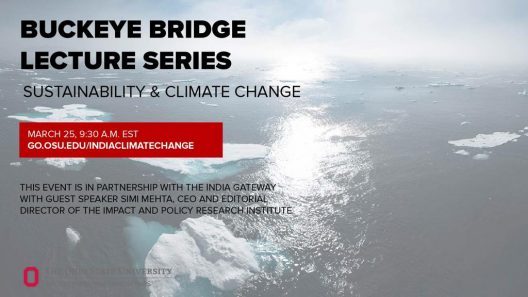
Buckeye Bridge Lecture Series: Dr Simi Mehta (CEO and Editorial Director, IMPRI) discussed Sustainability and Climate Change, as part of the series organised by the Ohio State University, USA
|
|
|
|
| |
|
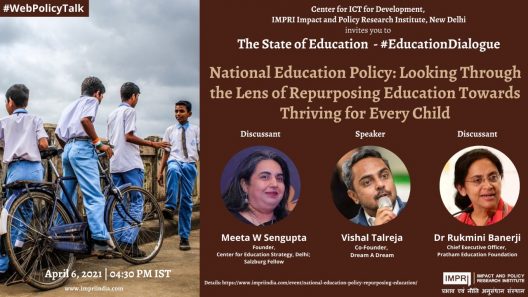
#EducationDialogue: Vishal Talreja (Co-founder, Dream A Dream, Bangalore) on National Education Policy: Looking Through the Lens of Repurposing Education Towards Thriving for Every Child
Chaired by Prof Sachidanand Sinha (Jawaharlal Nehru University, New Delhi), with discussant Dr Rukmini Banerjee (Pratham Education Foundation) and Meeta Sengupta (Centre for Education Strategy, Delhi)
|
|
|
|
| |

|
#CityConversations: Dr Deljana Iossifova (Senior Lecturer, Urban Studies, University of Manchester; Director, Confucius Institute, UK) on Infrastructuring the City: Trajectories of Violence
Moderated by Dr Soumyadip Chattopadhyay (Visva-Bharati, Santiniketan; IMPRI), and Chaired by Prof Darshini Mahadevia (Ahmedabad University) with discussants Dr Xuefei Ren (Michigan State University), Dr Rumi Aijaz (Observer Research Foundation), Prof Kala Sridhar (Institute for Social and Economic Change (ISEC), Bengaluru), Dr Ziming Li (Wuhan University) and Mr Sameer Unhale (Department of Municipal Administration, Government of Maharashtra)
|
|
|
|
| |
|
#EmploymentDebate and Book Discussion: Prof K. R. Shyam Sundar (Professor, HRM Area, XLRI – Xavier School of Management, Jamshedpur, Jharkhand) on Impact of COVID-19, Reforms and Poor Governance on Labor Rights
Chair: Prof Praveen Jha (Jawaharlal Nehru University, New Delhi)
Book Release and Opening Remarks: Prof D. N. Reddy (Formerly, University of Hyderabad)
Discussants: Ramapriya Gopalakrishnan (ILO Consultant and Labour Advocate, Chennai), Prof Babu Mathew (NLSIU, Bengaluru) and Dr Radhicka Kapoor (ICRIER, New Delhi)
|
|
|
|
| |
|
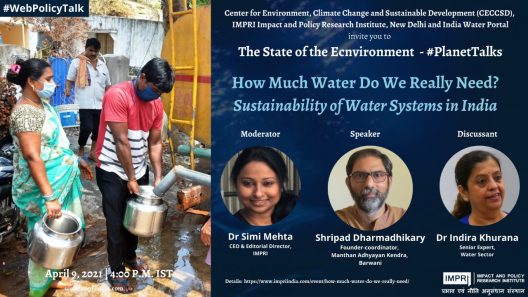
#PlanetTalks: Shripad Dharmadhikary (Founder-coordinator, Manthan Adhyayan Kendra) on How Much Water Do We Really Need?: Sustainability of Water Systems in India
Moderated by Dr Simi Mehta (IMPRI), with discussant Dr Indira Khurana (Tarun Bharat Sangh)
|
|
|
| |
| |
Thank you for your continued encouragement and participation in our endeavours, and for your meaningful support towards our efforts in carrying out serious research. |
|
| |
|
|
| |
| |
IMPRI, a startup research think tank, is a platform for pro-active, independent, non-partisan and policy-based research. It contributes to debates and deliberations for action-based solutions to a host of strategic issues. IMPRI is committed to democracy, mobilization and community building. |
|
| |
|
|
|